
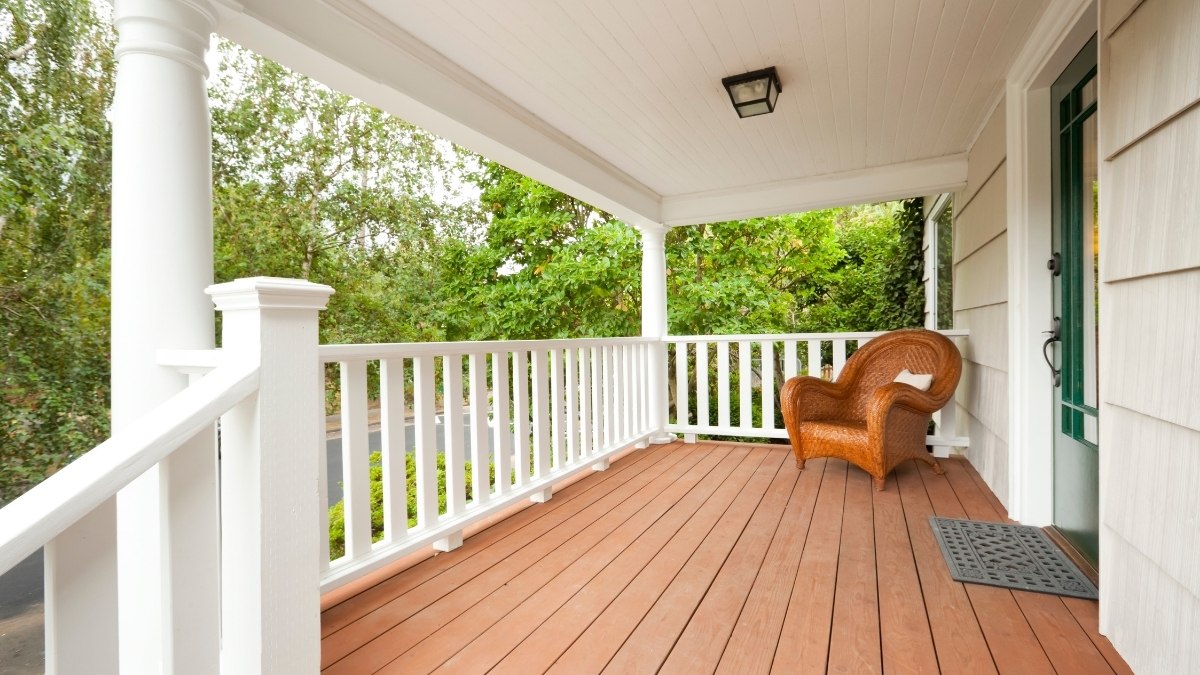
What’s In This Guide
A porch may look like one painting project, but its parts experience very different conditions. Floorboards can retain water, steps are subject to abrasion, railings have multiple exposed edges, and posts may absorb moisture near their bases.
Before searching for “porch painters near me,” homeowners in Prospect, CT, should evaluate the wood, the existing coating, and the porch’s exposure. Good preparation starts with the cause of failure, not simply the visible peeling.
Quick Facts
- Inspect boards, railings, posts, steps, and trim before choosing paint.
- Repair moisture sources and damaged wood before surface preparation begins.
- Use a coating specifically rated for the porch surface and expected traffic.
- Clean, scrape, sand, dry, and prime as the selected coating system requires.
- Use lead-safe practices when disturbing paint on homes built before 1978.
What Should You Check Before Repainting a Wood Porch?
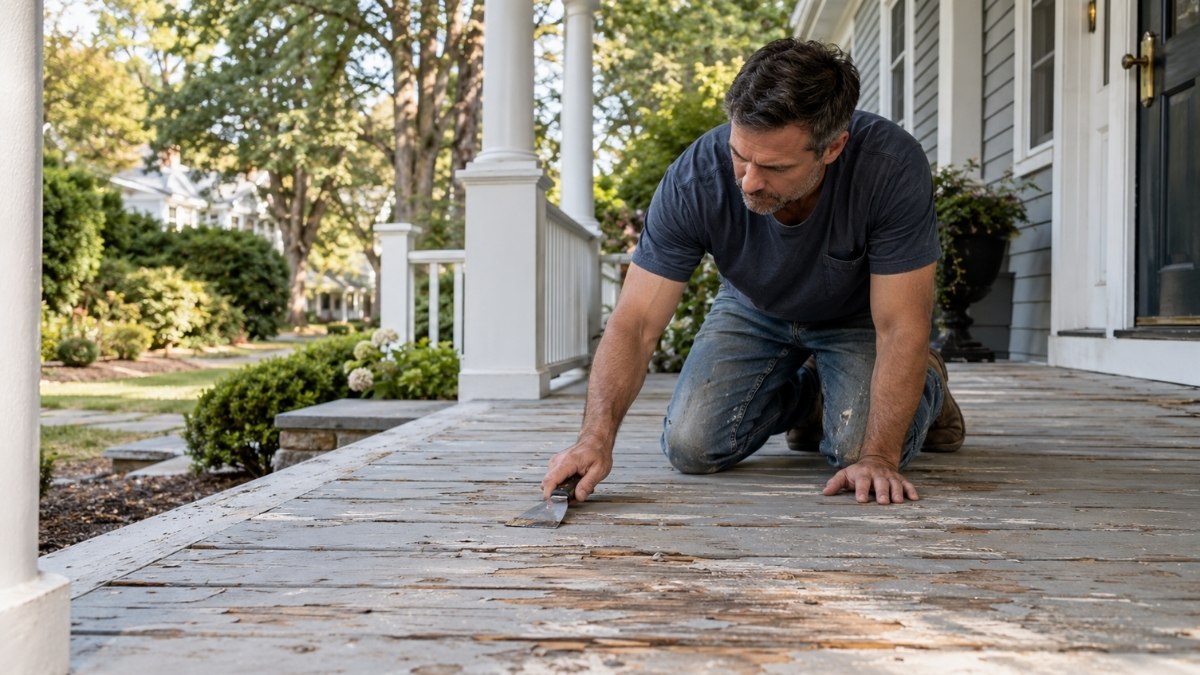
Start with the wood itself. Press a screwdriver gently against suspicious areas, especially board ends, stair stringers, post bases, joints, and spots near gutters. Sound wood should resist light pressure. Softness, crumbling fibers, deep splits, movement, or sagging may indicate decay or another repair need. Painting cannot restore structurally weakened wood or correct an active moisture problem.
Next, trace the source of moisture. Look for overflowing gutters, poor drainage, roof runoff, trapped leaves, missing flashing, failed caulk joints, and boards that remain shaded and damp. The USDA Forest Products Laboratory explains that moisture control is central to the performance of exterior wood finishes. A coating can slow moisture movement, but it cannot correct repeated water intrusion or standing moisture against the wood.
Also identify the existing finish. Paint forms an opaque film, while solid-color stain hides most of the wood grain but may perform differently depending on the product. Semi-transparent stain allows more grain to remain visible and usually requires a compatible, absorbent surface. A penetrating stain will not perform as intended when applied over intact paint.
How to Prepare an Outdoor Wood Porch for Painting
- Inspect and repair. Secure loose boards and fasteners. Replace deteriorated wood and correct water-entry or drainage problems before coating.
- Clean the surface. Remove dirt, pollen, chalking, suspected mildew, grease, and loose debris using a method appropriate for the wood. Aggressive pressure washing can damage wood fibers and force water into joints.
- Remove failed coating. Scrape peeling paint and feather rough edges. Sand glossy areas when the coating instructions require better adhesion. Full stripping may be necessary when the old film is extensively cracked, blistered, or incompatible with the planned finish.
- Let the wood dry. Do not coat damp lumber. Follow the paint or stain manufacturer’s moisture, temperature, humidity, and rain-window requirements.
- Prime where required. Bare wood, discoloration, knots, exposed fasteners, and repaired areas may need a compatible primer. Use a primer approved for both the substrate and the selected topcoat.
- Apply the correct system. Follow label directions for spread rate, coat count, recoat time, application tools, and curing before foot traffic.
Lead-Safe Preparation for Older Porches
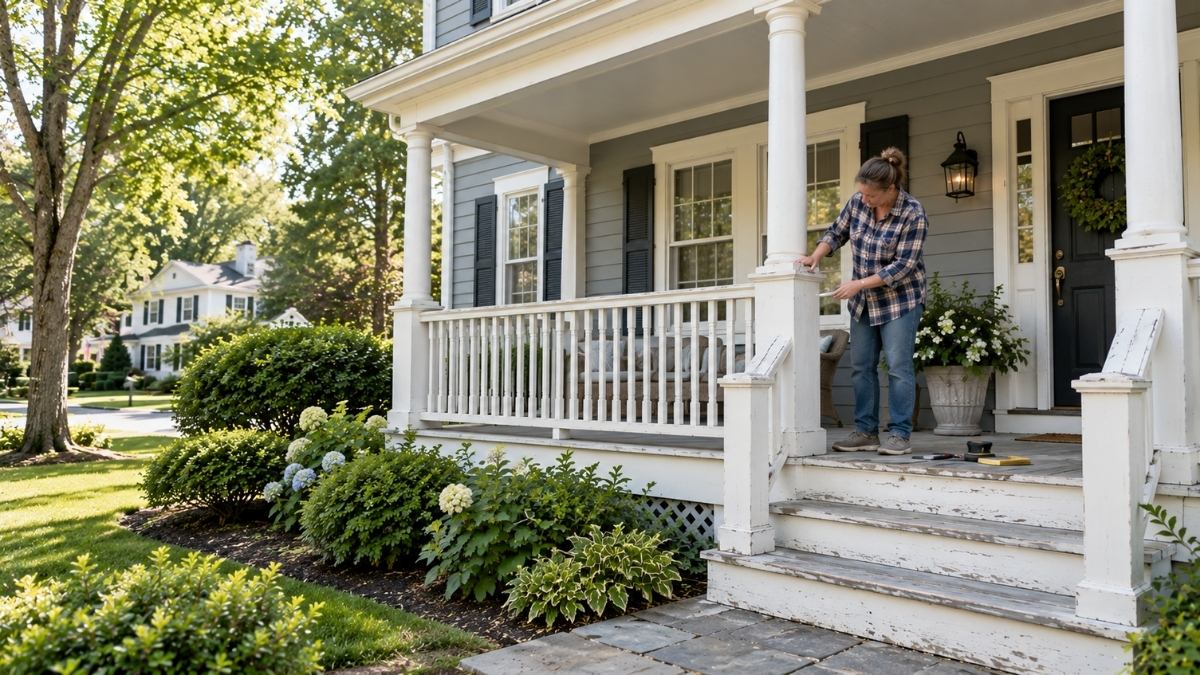
Paint disturbance can become a safety-sensitive issue in older homes. The U.S. Environmental Protection Agency warns that sanding, scraping, cutting, and similar work can create hazardous lead dust in pre-1978 housing.
Contractors performing covered renovation, repair, or painting work for compensation must follow applicable lead-safe requirements. Homeowners should avoid uncontrolled dry sanding and determine whether lead testing or a lead-safe certified contractor is appropriate before work begins.
Choosing Outdoor Paint for Wood Porch Surfaces
Match the Coating to the Surface
Do not assume the same product is appropriate for every exterior wood surface. Different components have different performance requirements.
- Porch floors and steps: Use a floor-and-porch coating rated for horizontal surfaces, abrasion, and foot traffic.
- Railings, columns, fascia, and trim: These typically require an exterior wood primer-and-paint system.
Read product labels carefully. “Outdoor paint for wood” is a broad product description, not a specific performance rating.
Consider the Exposure Conditions
Environmental conditions affect how well a coating performs.
- Covered porches: These surfaces may receive less direct rain but can still experience condensation and wind-driven moisture.
- Uncovered porches: These surfaces face greater exposure to sunlight, standing water, snow, and temperature changes.
- Color and finish matter: Dark colors absorb more heat, while glossier finishes can make surface imperfections more noticeable.
Ultimately, the best outdoor wood paint is one that is compatible with the substrate, existing coating, surface orientation, and expected maintenance schedule.
When Should You Call a Porch Painter?
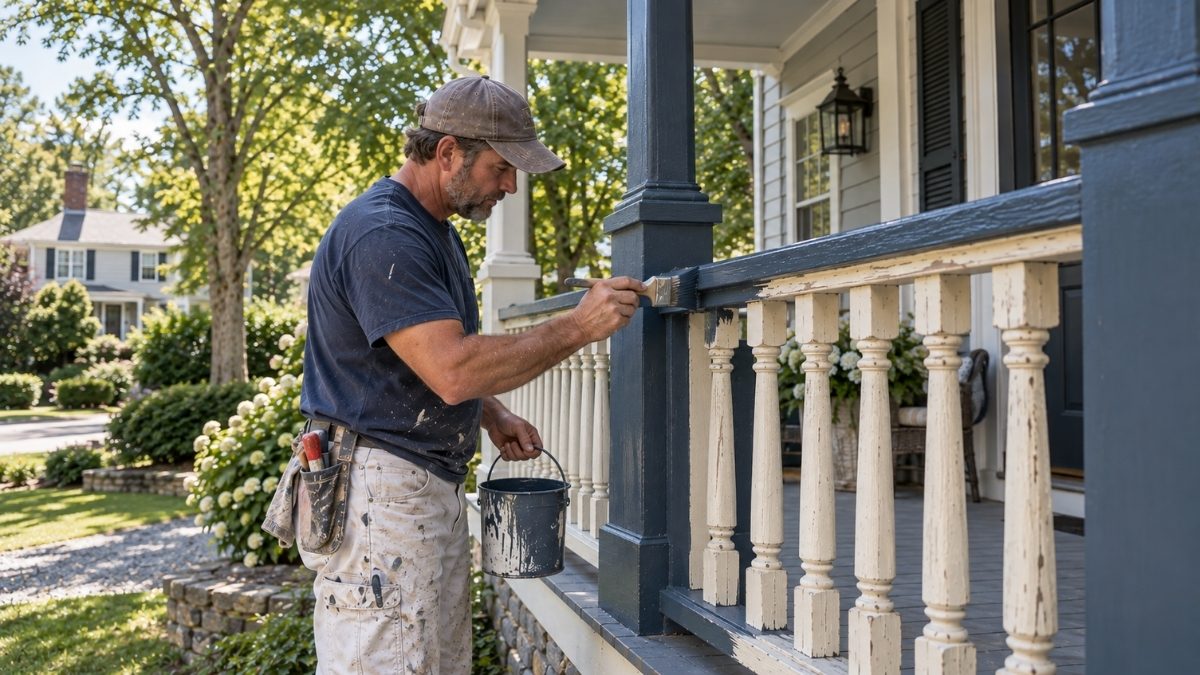
Professional help may be appropriate when coating failure covers large areas, the work requires ladders, damaged steps or railings need repair, moisture problems keep returning, or the existing finish cannot be identified.
When comparing outdoor house painters near you, ask how each contractor will assess the wood, prepare different surfaces, plan around the weather, address possible lead paint, and select coatings for floors and vertical components.
Frequently Asked Questions
Can you paint over peeling porch paint?
No. Loose paint must be removed to a sound edge. Painting over actively peeling paint usually causes the new coating to peel as well.
Should porch wood be pressure washed before painting?
Sometimes, but the pressure setting and cleaning technique matter. Cleaning should remove contaminants without gouging the wood or forcing excess water into joints. The porch must dry fully before coating.
Is porch paint the same as exterior house paint?
Not always. Vertical exterior paint may not be formulated for foot traffic or standing water. Floors and steps need a product labeled for those uses.
How long should a porch dry after rain or washing?
There is no universal drying time. Wood species, shade, airflow, temperature, humidity, and porch construction all affect how quickly the surface dries. Check the coating label and verify that the wood meets the manufacturer’s moisture requirements before painting.
What is the best time of year to paint a porch?
Choose a period with mild temperatures, manageable humidity, and little chance of rain. Avoid painting in direct midday sun, shortly before rainfall, or when overnight temperatures may fall outside the product’s recommended range. Following the manufacturer’s application requirements helps support proper adhesion and curing.
Plan Your Porch Painting Project
A durable repaint begins with sound wood, controlled moisture, careful preparation, and a coating selected for the specific surface. Prospect House Painting Pros provides exterior painting services for porches and other exterior wood features throughout Prospect, CT.
Request a free estimate today to discuss your porch’s condition, weather exposure, preparation requirements, and suitable coating options.